| Schedule |
|---|
| Wednesday, March 11 | Location |
|---|
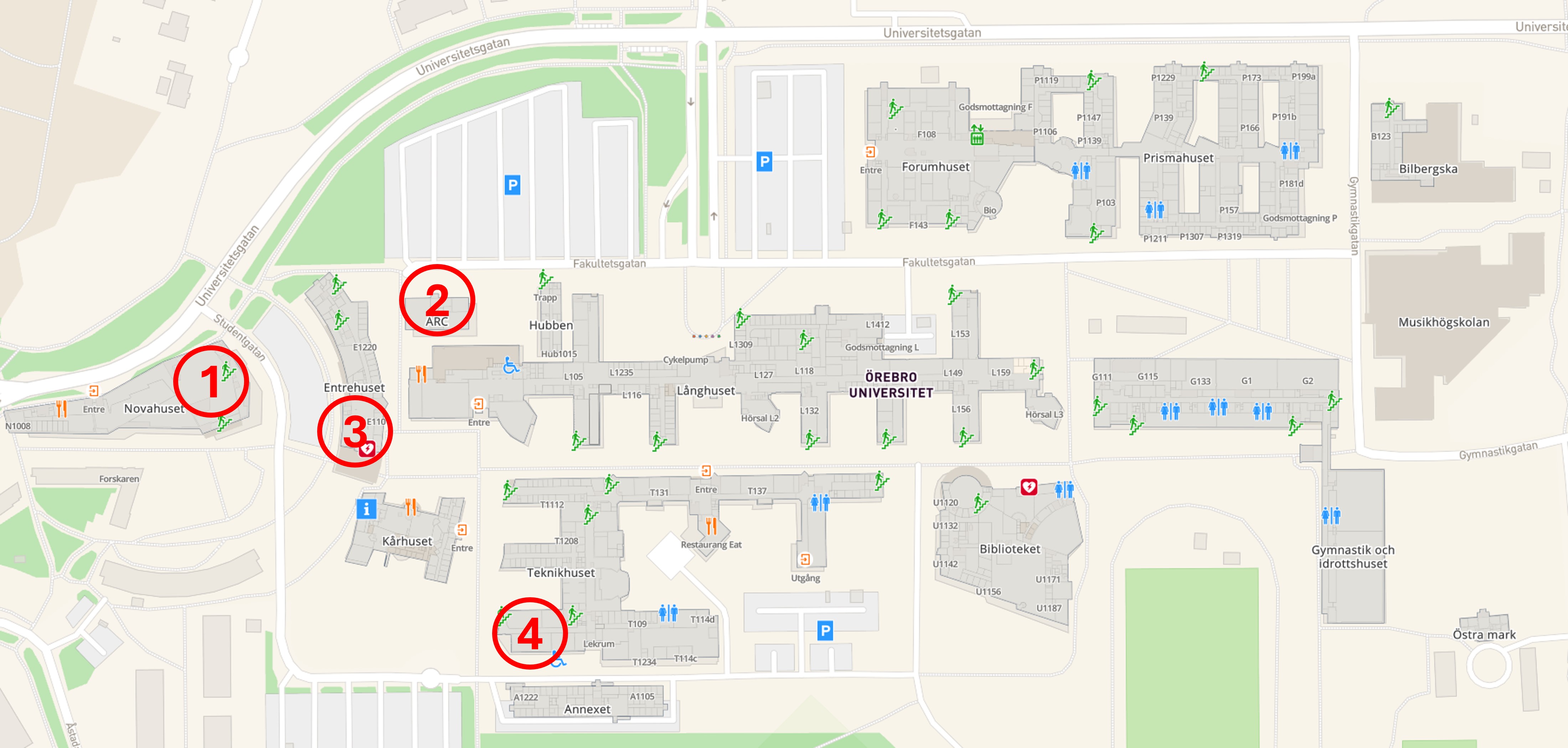
| 9.00 - 10.00 | Student Registration | VisualLab, ARC-building |
|---|
| 9.15 - 11.45 |
"InfraVis User Training: Visualise your research using Python" by InfraVis - The National Research Infrastructure For Data Visualization.
Organized by Anders Hast and Ingela Nyström, Dept. of Information Technology, Uppsala University.
Click here for registration (deadline: March 9th at 23.59)
| Innovasalen, ARC-building |
|---|
| 10.00 - 12.00 | PhD students morning
Tour, demos, and fun activities starting in the VisualLab and then visit RobotLab at Örebro University | VisualLab & RobotLab |
|---|
| 9.30 - 12.00 | Educator's Forum
Contact Elisa if you would like to register | Fakultetsklubben, Entréhuset |
|---|
| 12.00 - 13.00 | Registration | Aula Nova Lounge, Novahuset |
|---|
| 12.00 - 13.00 | Lunch | Aula Nova Lounge, Novahuset |
|---|
| 13.15 - 13.30 | Welcome and opening | Aula Nova, Novahuset |
|---|
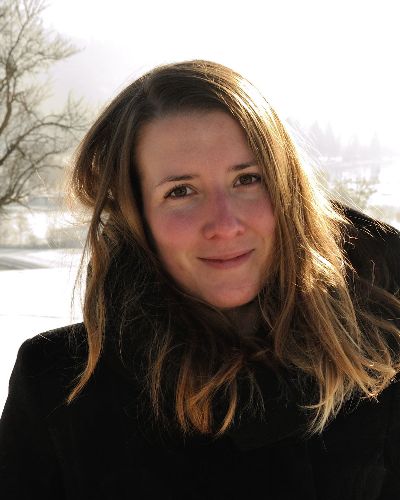
| 13.30 - 14.30 | Keynote: Elisabeth Wetzer
Chair: Amy Loutfi | Title: Addressing Challenges in Medical Imaging with Deep Learning and Domain Expertise | Aula Nova, Novahuset |
|---|
| 14.30 - 14.50 | Oral presentations
Chair: Amy Loutfi |
Session 1: Geometric Foundations & Spatial Intelligence
| Aula Nova, Novahuset |
|---|
| 14.50 - 15.10 | Coffee Break | Aula Nova Lounge, Novahuset |
|---|
| 15.10 - 16.50 | Oral presentations
Chair: Suraj Neelakantan |
Session 1: Geometric Foundations & Spatial Intelligence (cont.)
| Aula Nova, Novahuset |
|---|
| 17.00 - 19.00 | Welcome Reception with SSBA 50 years history presentation | Aula Nova Lounge, Novahuset |
|---|
| Thursday, March 12 |
|---|
| 9.00 - 10.20 | Oral presentations
Chair: Stephan Unter |
Session 2: Medical Segmentation and Learning Theory
| Aula Nova, Novahuset |
|---|
| 10.20 - 10.30 | Coffee Break | Aula Nova Lounge, Novahuset |
|---|
| 10.30 - 10.50 | Oral presentations
Chair: Amanda Berg |
Session 2: Medical Segmentation and Learning Theory (cont.)
| Aula Nova, Novahuset |
|---|
| 10.50 - 12.05 | Industry session
Chair: Amanda Berg |
10.50 - 11.05: Raysearch Laboratories
11.05 - 11.20: SICK
11.20 - 11.35: Visage Technologies
11.35 - 11.50: Synteda
11.50 - 12.05: Vantor
| Aula Nova, Novahuset |
|---|
| 12.05 - 13.00 | Lunch | Aula Nova Lounge, Novahuset |
|---|
| 13.00 - 14.00 | Keynote: Martin Magnusson
Chair: Stephanie Lowry | Title: 4D image analysis for people detection and navigation with radar data | Aula Nova, Novahuset |
|---|
| 14.00 - 14.20 | Oral presentations
Chair: Stephanie Lowry |
Session 3: 3D Understanding and Motion Sensing
| Aula Nova, Novahuset |
|---|
| 14.20 - 14.40 | Coffee Break | Aula Nova Lounge, Novahuset |
|---|
| 14.40 - 15.40 | Poster session | Aula Nova Lounge, Novahuset |
|---|
| 15.40 - 17.00 | Oral presentations
Chair: Gayan Pathirage |
Session 3: 3D Understanding and Motion Sensing (cont.)
| Aula Nova, Novahuset |
|---|
| 17.00 - 18.00 | SSBA annual meeting | Aula Nova, Novahuset |
|---|
| 18.00 | Bus departure | Outside Novahuset |
|---|
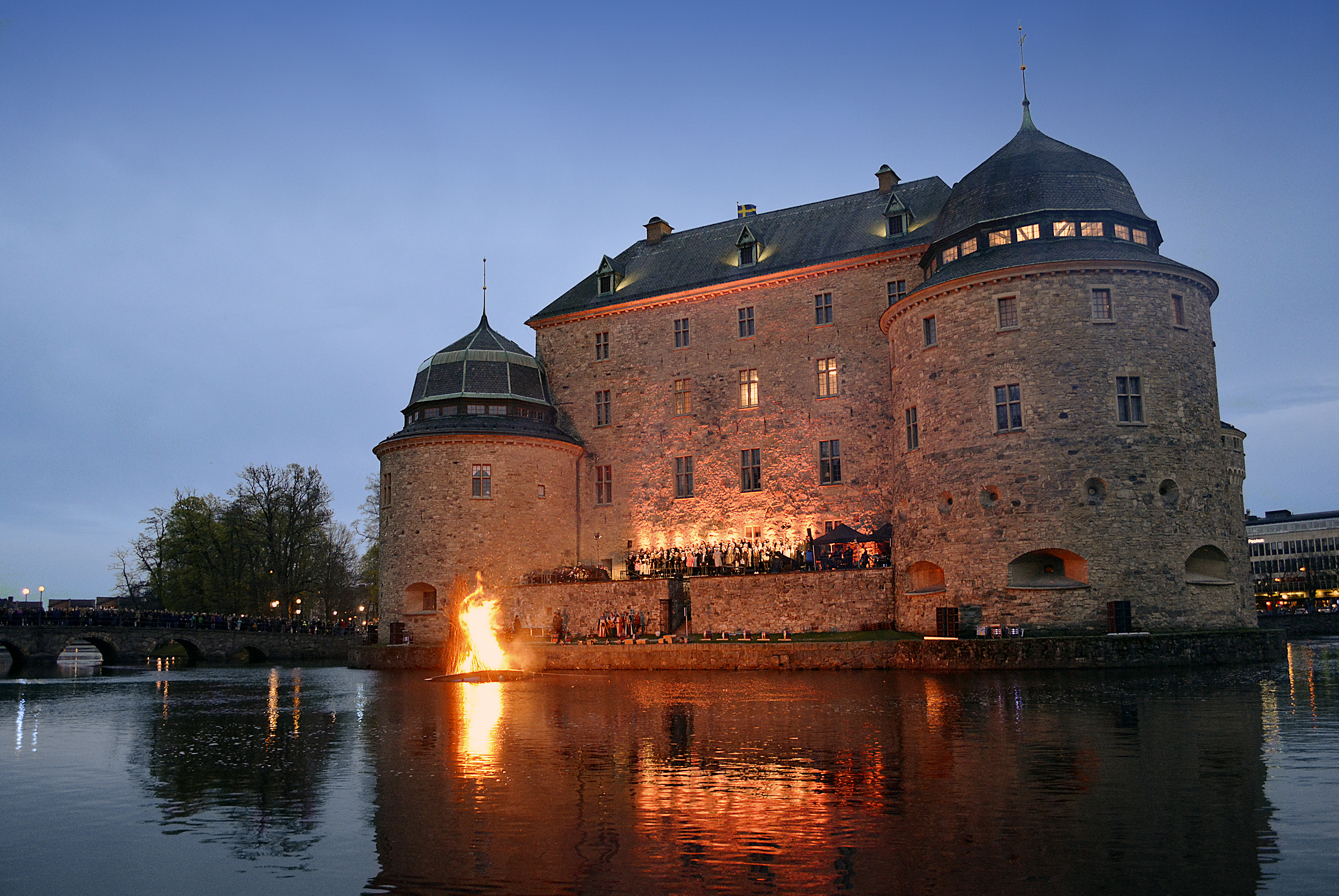
| 19.00 - | Dinner | Örebro Castle |
|---|
| Friday, March 13 |
|---|
| 9.00 - 10.20 | Oral presentations
Chair: Victor Wåhlstrand |
Session 4: Computational Pathology and Bio-Analysis
| Aula Nova, Novahuset |
|---|
| 10.20 - 10.40 | Coffee Break | Aula Nova Lounge, Novahuset |
|---|
| 10.40 - 11.00 | Oral presentations
Chair: Amy Loutfi |
Session 4: Computational Pathology and Bio-Analysis (cont.)
| Aula Nova, Novahuset |
|---|
| 11.00 - 12.00 | Keynote: Jonas Unger
Chair: Amy Loutfi | Title: Sparse Modeling and Sampling for Efficient Image Synthesis | Aula Nova, Novahuset |
|---|
| 12.00 - 13.00 | Lunch | Aula Nova Lounge, Novahuset |
|---|
| 13.00 - 14.40 | Oral presentations
Chair: Tahereh Dehdarirad |
Session 5: Multimodal Sensing and Document Analysis
| Aula Nova, Novahuset |
|---|
| 14.40 - 14.45 | Closing | Aula Nova, Novahuset |
|---|
The details of the program are subject to change. See conference proceedings for order of oral presentations.
I will present ongoing research on image analysis that moves beyond the traditional visual spectrum, motivated by the simple observation that cameras fail precisely in many of the environments where autonomy is most needed. Fog, dust, smoke and darkness routinely degrade optical sensing and challenge state-of-the-art perception systems. Recent advances in radar sensor hardware are changing this landscape. Modern radars now provide so-called 4D sensing, capturing not only range, azimuth, and elevation, but also radial velocity at high spatial and temporal resolution. This additional structure enables image analysis for computer vision and autonomous mobility even when vision breaks down.
I will outline our work on radar-centric perception, highlighting how 4D radar data can be interpreted for robust scene understanding and navigation in degraded visibility. The broader message of the talk is that reliable autonomy in the real world requires perception systems that are designed for failure modes, not just for ideal conditions, and that expanding the notion of "imagery" beyond light is a key step in that direction.








.png)